The NCR process will support your business to systematically track and resolve non-conformances, ensuring that mistakes are corrected and improvements are made. Follow this structured approach to maintain high standards, enhance efficiency, and build a reputation for reliability.

Step 1: Identifying the Non-Conformance

Detect deviations from expected standards. 

Flip the cards below to see how non-conformances are identified.

Non-conformances can be major (serious impact on quality or safety) or minor (small deviations that still require correction). Identifying them early ensures that your business takes swift action.


Step 2: Documenting the Non-Conformance

Record all relevant details. 

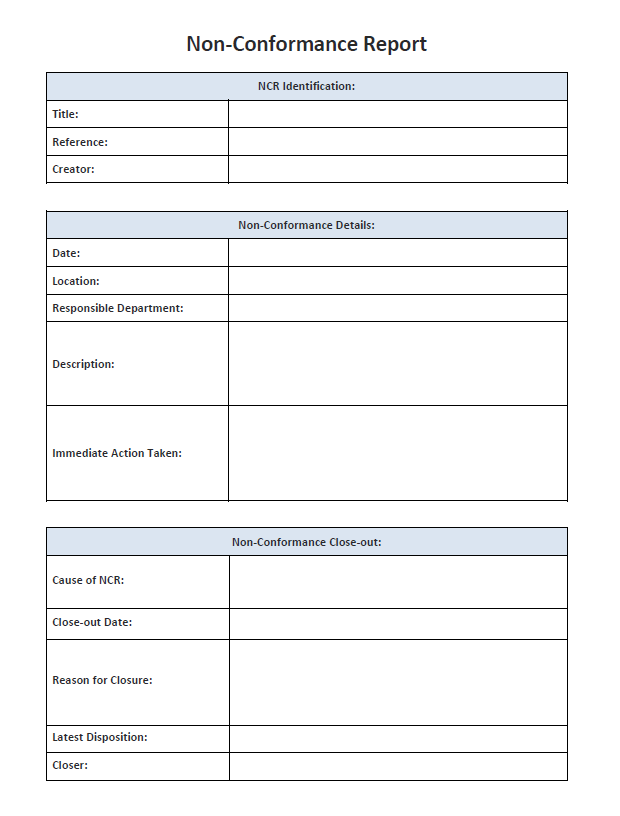
Click on the ⦿ markers to see what an NCR form includes. 

Date

When did the non-conformance happen?

Location

Where did the non-conformance happen?

Responsible department or individual

Who is involved?

Supporting evidence

Photos, test results, reports.

Immediate action taken

Were any quick fixes applied?

Step 3: Root Cause Analysis

Understand why the issue occurred. Use one of or a combination of the following root cause analysis methods:

Step 4: Corrective and Preventative Action Plan (CAPA)

Apply solutions to fix and prevent recurrence. 

Hover over each card to learn more about the types of corrective and preventive plans. 

Step 5: Closing and Verifying the NCR

Ensure the resolution is effective and sustainable. An NCR is closed once corrective actions are completed and verified. This involves:

Refine your quality management systems and ensure ongoing compliance with South African industry standards and regulations through continuous improvements.

The steps on an NCR are detailed, once you are finished, 

Click onMark Complete ✓“ to move onto the next lesson.